The quick answer: five checks before you call
No water in the house on a well almost always comes down to one of five things: no power to the well pump, a pressure tank that has lost pressure, a pressure switch that has failed or tripped, a leak or burst line that drained the system, or a clogged filter or softener. Check them in that order.
Most take a few minutes and need no tools. If the breaker trips again, the gauge reads zero with the power on, or you find water running somewhere it should not be, stop checking and call a plumber.
Two safety rules first
A well pump runs on 240 volts, and the pressure switch sits right on top of live terminals. Keep the switch cover on unless you know what you are doing. Never touch wiring or pump controls with wet hands or while standing in water. If the well house or pump house is flooded, stay out of it.
If you find a pipe spraying water, turn the pump off at its breaker before anything else. On a well there is no meter valve at the street. Until someone closes the valve after the pressure tank, that breaker is your main shutoff.
Need a plumber now? A real person answers, day or night.
Answering 24/7Every plumber we send is licensed and insured in Texas.
Check 1: Power to the well pump
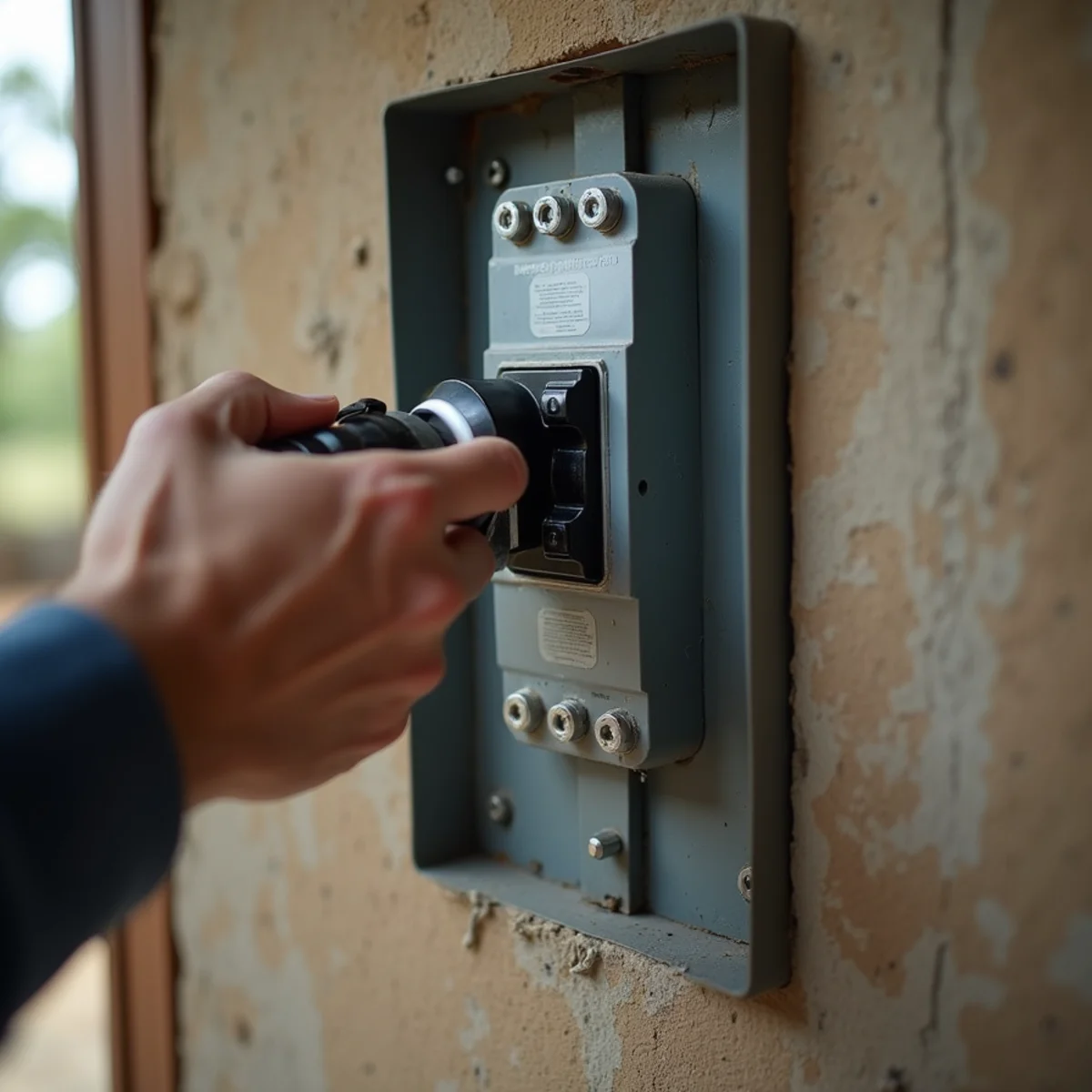
Start at the electrical panel. Most Bandera County well pumps sit on a double-pole breaker, often labeled "well" or "pump". Look for one that has tripped to the middle or off position.
- If it has tripped, reset it once.
- If it trips again right away, leave it off. A short in the wire, the switch or the pump is likely, and repeated resets can make it worse.
- Some systems also have a disconnect or a control box in the well house. Make sure it is on.
- After a thunderstorm, think lightning. A surge can take out the pressure switch, the control box or the pump even when the breaker looks fine.
If the power is on and the taps are still dry, go to the tank.
Check 2: Read the pressure tank gauge
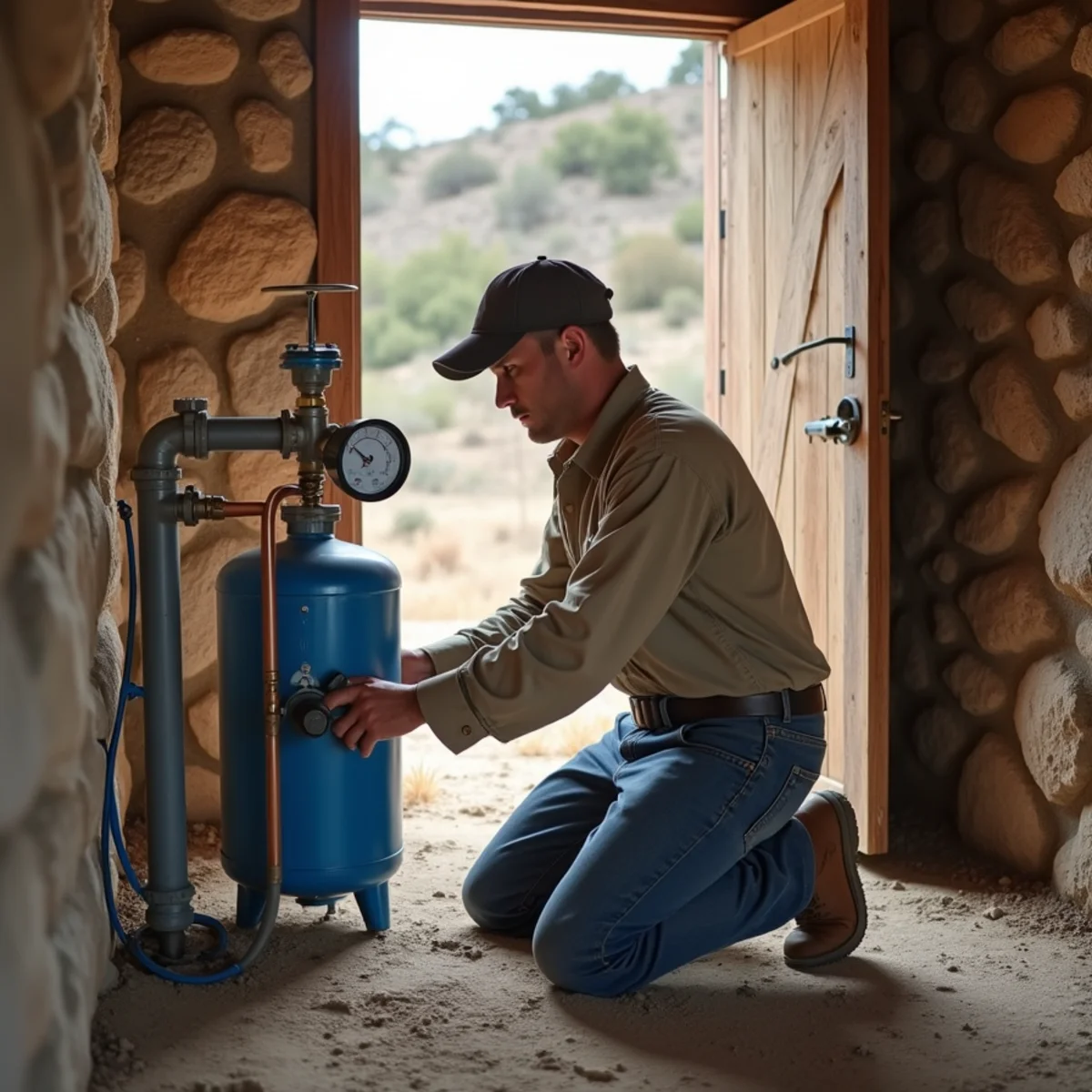
The pressure tank is the tall blue, gray or white tank near the wellhead or in a utility room, with a small round gauge on the pipe beside it. That gauge tells you more than anything else on the property.
| Gauge reading | What it usually means | What to do |
|---|---|---|
| Zero, and the pump is silent | No power reaching the pump, a failed pressure switch or a tripped low-pressure cutoff | Recheck the breaker, then look at the switch |
| Zero or low, and you hear the pump running | Water is not arriving: a broken line, a failing pump or a low water level in the well | Turn the pump off at the breaker and call |
| Normal pressure, but no water at the taps | A closed valve, a clogged filter or softener, or a frozen line between the tank and the house | Check valves, filters and the softener bypass |
| Needle jumps up and down, pump clicks on and off | A waterlogged tank or a failed bladder | Call soon; short cycling wears out pumps |
Normal pressure sits between the switch's cut-in and cut-out settings, commonly 30 to 50 or 40 to 60 psi. The setting is usually printed inside the switch cover or on a tag.
Need a plumber now? A real person answers, day or night.
Answering 24/7Every plumber we send is licensed and insured in Texas.
Check 3: The pressure switch
The pressure switch is the small gray box on a short tube near the tank. It starts the pump when pressure falls and stops it when pressure reaches the cut-out point.
Many switches have a small lever on the side. That is a low-pressure cutoff: if pressure drops below a set point, often around 10 psi, it shuts the pump off so it does not run dry. Resetting it means holding the lever while the pump builds pressure, inches from live terminals. If you are not comfortable with that, leave it for the plumber. And if it trips again soon after, something caused it, such as a leak, a weak pump or a low well, and another reset will not fix that.
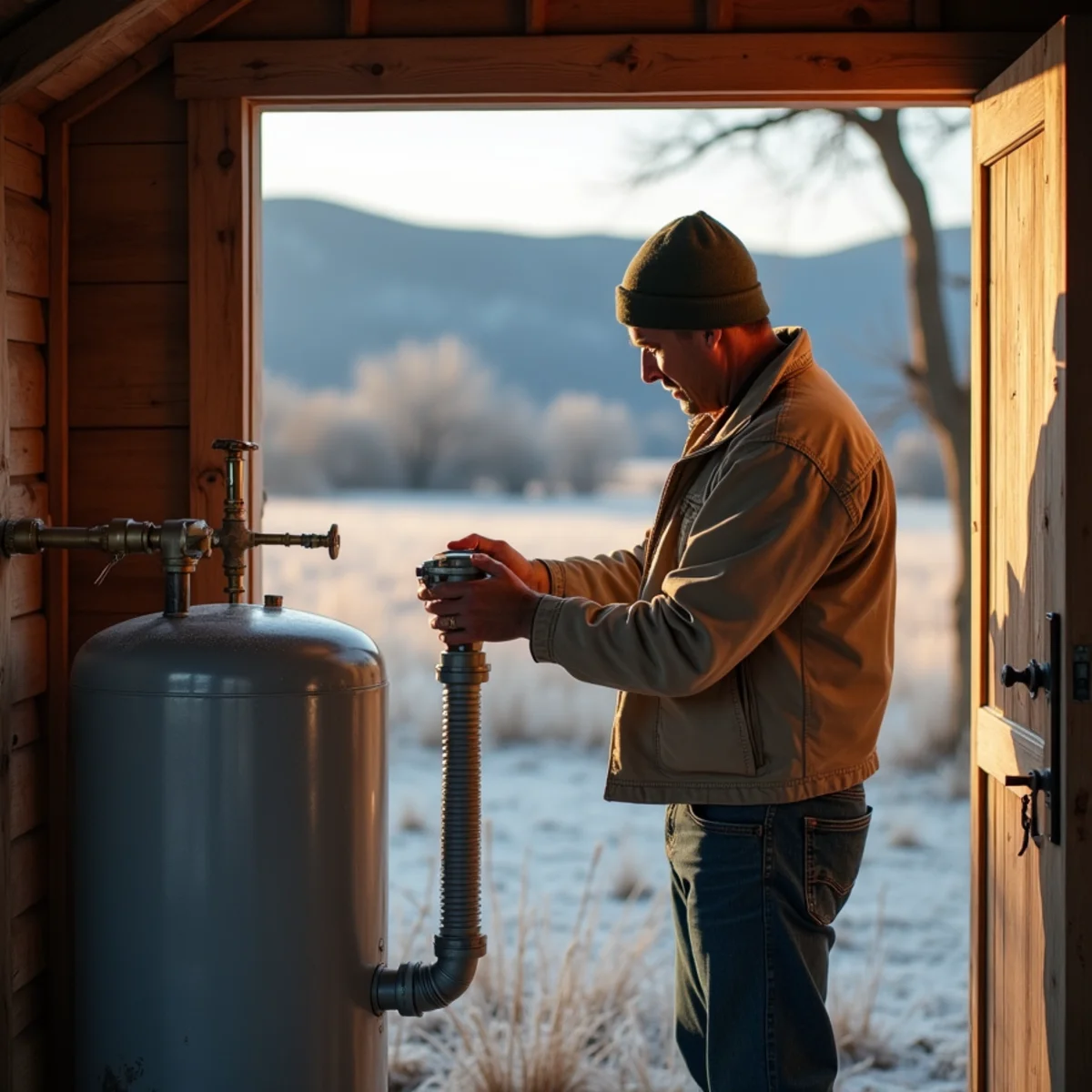
Two more problems are common here. The thin tube under the switch can plug with scale from hard Trinity Aquifer water, so the switch never senses the drop in pressure. And in a freeze, that tube is often the first thing to ice up.
Check 4: Look for a leak or a broken line
A pump can run for hours and still leave the house dry if the water is going somewhere else. Walk the property.
- Look for a wet spot, a soft patch or unusually green grass along the line from the well to the house.
- On a pier-and-beam house or a manufactured home, look and listen under the floor.
- Check hose bibs, yard hydrants and the lines to barns, troughs and guest cabins.
- After a hard freeze, assume something split until you prove otherwise.
If you find water, keep the pump off and read our guide to burst pipe and broken water line repair. To keep the next cold snap from doing this, see our checklist for freeze-proofing a well house and pressure tank.
Need a plumber now? A real person answers, day or night.
Answering 24/7Every plumber we send is licensed and insured in Texas.
Check 5: Whole house or one fixture?
Open a few faucets in different rooms, hot and cold.
- One fixture is dry or barely running: the aerator or cartridge is probably packed with scale. That is faucet and fixture repair, not a well problem.
- Only the hot side is weak: check the valve on the water heater's cold inlet and the heater itself.
- Everything is weak but the gauge reads normal: look at the whole-house sediment filter or softener. A clogged cartridge can choke flow to a trickle. Putting the softener in bypass is a quick test.
When it is the well pump, not the plumbing
Bandera County wells commonly reach 200 to 500 feet into the Trinity Aquifer, with a submersible pump hung deep in the casing. If power reaches the well, the switch closes and the gauge still will not climb, the pump, its wiring or the water level is the likely cause.
Pulling a submersible pump is a job for a TDLR-licensed pump installer with a pump rig. A plumber handles the plumbing between the wellhead and the house: the pressure tank, switch, gauge, valves, filters and the supply line. The plumber we send tests those parts and tells you plainly if the pump is the problem, so you call the right specialist once. Our page on septic and well plumbing in Bandera explains who does what.
Need a plumber now? A real person answers, day or night.
Answering 24/7Every plumber we send is licensed and insured in Texas.
From the plumber's side: what we find on no-water calls
The five checks above catch the common causes. When they come up clean, these are the things a plumber looks at next, and what each one means for the fix:
The tank's air charge
A bladder pressure tank needs the right air pressure behind the bladder to work. The plumber turns the pump off, drains the system to zero, and checks the charge at the air valve on top of the tank with a tire gauge. It should be about 2 psi below the switch's cut-in: 28 psi on a 30/50 switch, 38 psi on a 40/60. If water comes out of the air valve, the bladder has failed and the tank needs replacing. A tank that only lost its charge can be recharged for far less.
A check valve that bleeds pressure overnight
If the gauge reads normal at night and low or zero in the morning with nothing running, water is draining back down the well or out through a leak. A failed check valve lets the column of water fall back, and the pump has to refill it every time. The plumber isolates the house side first; a check valve down in the well is a pump installer's job, one at the wellhead is not.
A well that needs to rest
In a dry year, a well can deliver water fine for a shower and then quit after an afternoon of filling troughs or watering. If the water comes back after the well sits for a few hours, the pump is likely pulling the water level down faster than the aquifer refills it. That is a yield problem, not a broken part. Spreading heavy use across the day, or adding storage, helps. The Bandera County River Authority and Groundwater District keeps information on local wells and drought.
Controls in the well house
Many deep-well pumps have a control box with a start capacitor that can fail and leave the pump humming but not starting. Some systems have a pump-protection switch that shuts the pump off when it senses it is running dry and needs a reset or a wait. Newer constant-pressure systems show an error code on the controller instead of a clicking switch; write it down before you call. The plumber tests these before anyone blames the pump.
What to tell the dispatcher
A few details help the plumber bring the right parts on the first trip, which matters when the drive is long.
- That you are on a well, and whether you have a softener or filter.
- The gauge reading and whether the breaker had tripped.
- Whether you can hear the pump running or the switch clicking.
- Any recent freeze, storm or power outage.
- Your gate code and the best way in, especially on acreage off SH 16 or FM 1283. We cover wells and septic systems in Pipe Creek and the rest of the county.
Need a plumber now? A real person answers, day or night.
Answering 24/7Every plumber we send is licensed and insured in Texas.
Bottom line: breaker, gauge, switch, then call
Most no-water calls on a well come down to power, pressure or a leak, and the first two checks take minutes. Leave wiring, pump pulling and anything near standing water to the pros. If the taps are still dry after these checks, call (858) 363-8298. We answer 24/7, and you get a price before work starts.
Common questions
Why is there no water after a thunderstorm when I am on a well?
Lightning and power surges often damage the parts that run a well pump: the pressure switch, the control box or the pump motor. Start with the pump breaker and any disconnect in the well house. If the power is on and the gauge still reads zero, a surge-damaged part is likely. A plumber can test the switch and controls and tell you whether the pump itself needs a licensed pump installer.
Can I reset my well pump myself?
You can safely reset a tripped breaker once. Resetting the low-pressure lever on the pressure switch means working near live 240-volt terminals, so only do it if you are comfortable around electrical equipment. If the breaker trips again or the lever keeps cutting out, stop. Repeated resets can burn out a pump that is running dry or fighting a short.
Do I need a plumber or a well company when I have no water?
It depends on where the fault is. Pressure tanks, pressure switches, gauges, valves, filters and the line from the wellhead to the house are plumbing work. A failed submersible pump, its drop pipe or the wiring down the well needs a TDLR-licensed pump installer. The plumber we send tests the parts above ground first and tells you if you need a pump specialist.
Why do the faucets spit air when the water comes back on?
When a well system loses pressure or a line is repaired, air gets into the pipes. Open a cold faucet at each end of the house and let it run until the flow is steady and clear. Some sediment may come out first. If the sputtering keeps returning days later, tell your plumber, since it can point to a leak in the line or a problem in the well itself.
Can a well run dry?
It can, especially in a long drought or when heavy use pulls the water level down faster than the aquifer refills it. More often the well has not truly gone dry; it needs time to recover. If water comes back after the well rests for a few hours, spread heavy use like trough filling across the day and talk to a well professional about storage. If it does not come back at all, call: the cause could still be the pump, the controls or a leak.
Still have a question? Ask the person who answers the phone.
Answering 24/7Every plumber we send is licensed and insured in Texas.