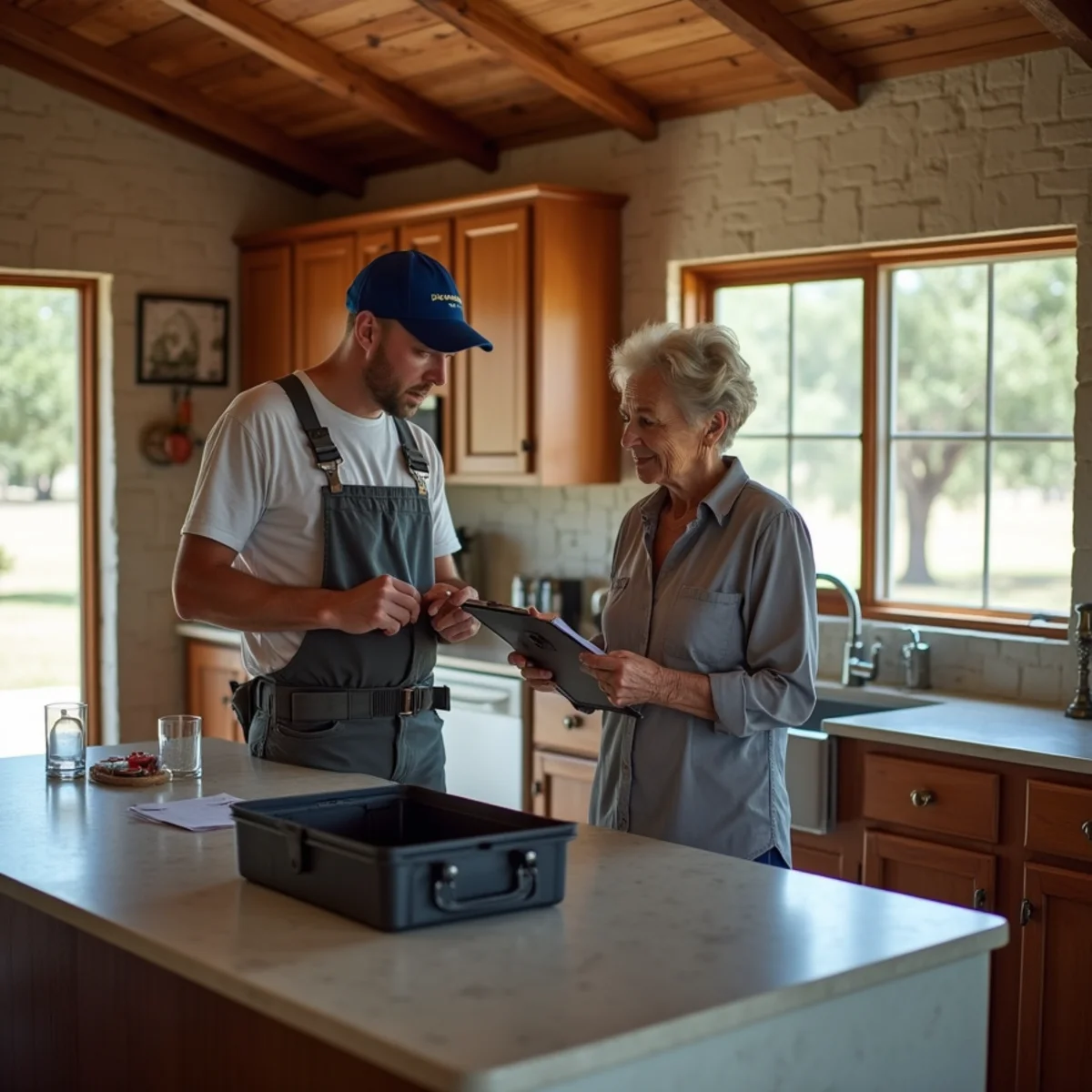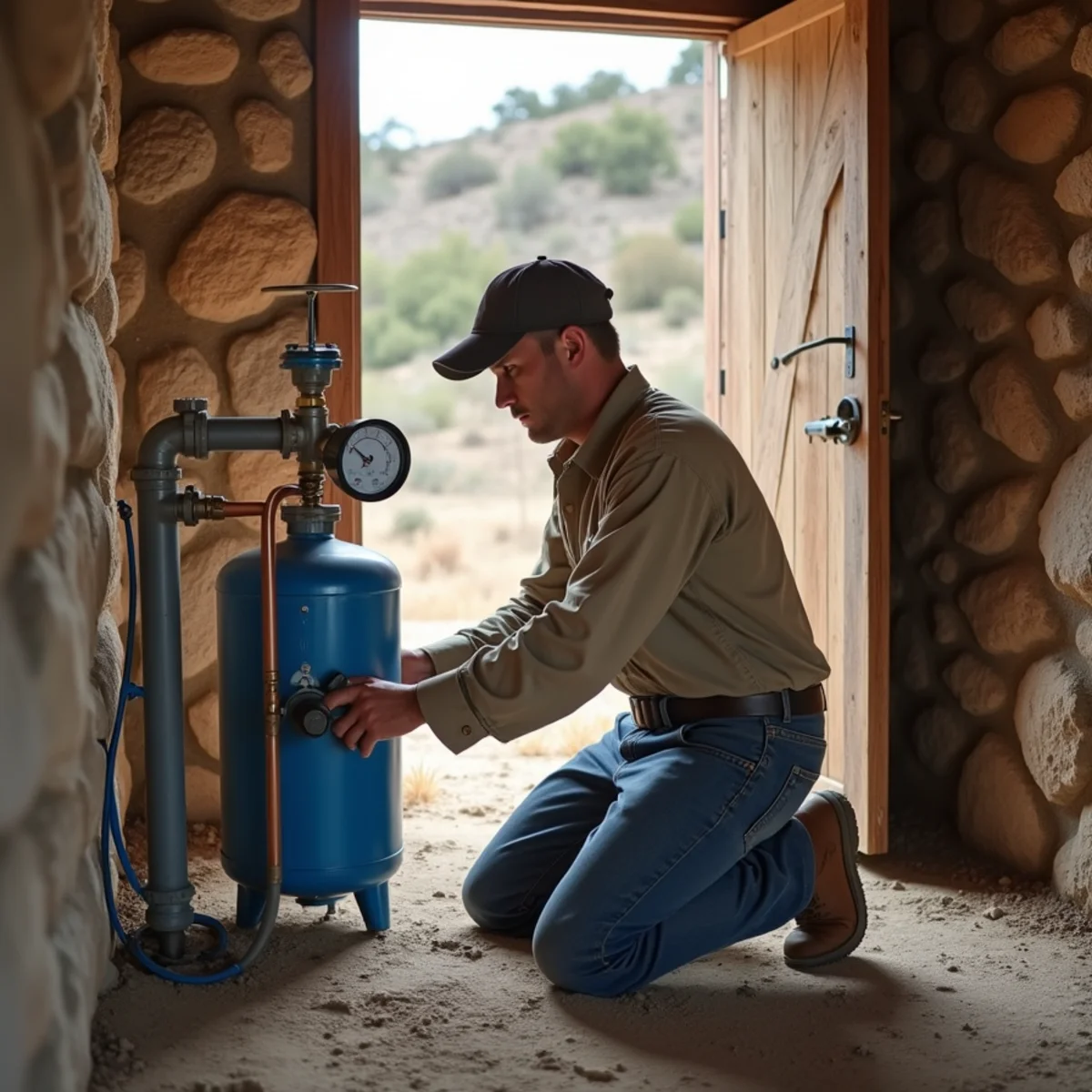
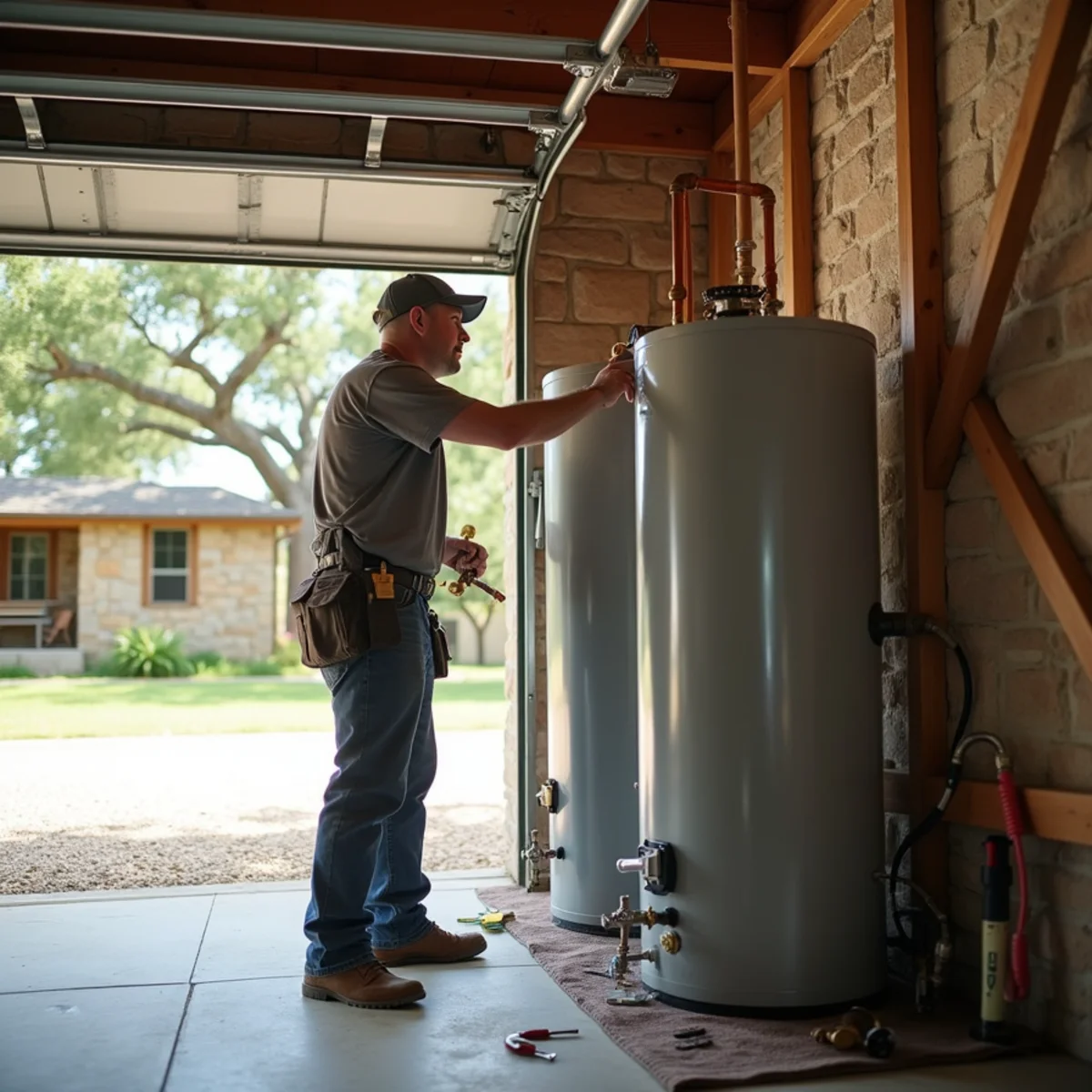
Water heater repair in Bandera, TX usually comes down to one of three things: a failed part, a tank choked with sediment from hard well water, or a tank that has rusted through and needs replacing. Bandera Plumbers answers 24/7 and sends a licensed plumber who works on electric, propane and tankless heaters, tells you honestly whether to repair or replace, and gives you the price before work starts.
Water heater problems we repair
A cold shower on a winter morning is the most common reason people look for water heater repair in Bandera, TX. The plumber we send handles:
- No hot water, or hot water that runs out fast
- Water pooling under the tank or dripping from the relief valve line
- Popping, rumbling or crackling while the tank heats
- Rusty or cloudy hot water
- Hot water that smells like rotten eggs
- A propane pilot that will not stay lit, or an electric heater that trips its breaker
- A tankless unit that shows error codes or swings between hot and cold
Many of these come down to a part: a heating element, a thermostat, a thermocouple or flame sensor, a gas control valve, a relief valve or a drain valve. A leak from the tank itself is different. Once the steel tank rusts through, replacement is the only real fix.
Warning signs a water heater is about to fail
Tanks rarely quit without warning. Call before a small sign becomes water across the utility room floor:
- Water around the base, even a little, or rust and crust at the fittings on top
- Rusty or muddy hot water when the cold water is clear
- Popping and rumbling that gets louder each year, a sign of sediment building up
- Hot water that runs out sooner than it used to, from sediment taking up the tank or a broken dip tube that mixes cold water into the outlet
- Temperature swings, from lukewarm to scalding, which point to a thermostat or control problem
- The relief valve dripping or discharging, covered below
Need a plumber now? A real person answers, day or night.
Answering 24/7Every plumber we send is licensed and insured in Texas.
Before you call: checks you can make in two minutes
- Electric heater: check the breaker. If it tripped, reset it once. Many electric heaters also have a high-limit (ECO) reset button behind the upper access panel; turn the breaker off before opening the panel. If either trips again, leave it off and call.
- Propane or gas heater: look through the sight glass for the pilot or flame, and check that the gas control knob is on, not on pilot or off. Make sure the propane tank is not empty. If you smell gas, skip all of this and leave the house.
- The setting: around 120°F is a common setting that limits scald risk and still gives plenty of hot water. A knob turned to "vacation" or bumped down explains a lot of lukewarm showers.
If none of that brings the hot water back, it is a repair call.
A dripping relief valve: pressure, heat or a bad valve
The temperature and pressure (T&P) relief valve on top of the tank is a safety device; never cap or plug its line. When it drips or spits, there are three usual causes. Pressure from the supply may be too high, which a pressure reducing valve fixes. On a closed system, water expanding as it heats has nowhere to go, which a thermal expansion tank fixes. Or the valve itself is worn or scaled and needs replacing. A valve that opens fully and releases hot water is an emergency: turn the heater off and call (858) 363-8298.
Need a plumber now? A real person answers, day or night.
Answering 24/7Every plumber we send is licensed and insured in Texas.
Repair or replace: how to decide
A worn part is worth replacing; a rusted-through tank is not. This usually settles it:
| What you are seeing | Usually a repair | Usually a replacement |
|---|---|---|
| Tank age | Well inside its expected life | Near or past the end of it |
| Leak | From a fitting, drain valve or relief valve | From a seam or the tank body |
| Electric heater, no hot water | A failed element or thermostat | Elements failing again and again under heavy scale |
| Propane heater, no hot water | Thermocouple, flame sensor or gas valve | Rusted burner area or a damaged flue |
| Noise | Sediment that still flushes out | Hardened scale that no longer flushes |
| Rusty hot water | A spent anode rod | Rust from the tank itself |
The age is coded into the serial number on the data plate. If you do replace, it is the moment to rethink size, fuel and location.
Hard Trinity Aquifer water and what it does to a tank: scale, sediment, popping
Wells across Bandera County draw from the Trinity Aquifer, and the water is hard, loaded with calcium and magnesium. When hard water is heated, those minerals drop out as scale. In a tank, the scale settles to the bottom as a layer of sediment.
On a propane heater, the burner heats the tank from below, through that layer. Water trapped under the sediment flashes to steam in small pockets, which is the popping and rumbling you hear. The heater burns more fuel to do the same work, and the tank bottom runs hotter than it was built for. On an electric heater, the lower element can end up buried in scale and burn out, sometimes more than once.
What helps:
- Flushing the tank to clear loose sediment. On untreated well water, once a year is a sensible starting point.
- A water softener or scale treatment ahead of the heater, which also protects faucets, toilets and the rest of the plumbing.
- Checking the anode rod every few years, covered below.
On a tank that has never been flushed, sediment can jam the drain valve open. If it will not close, leave it to a plumber.
Need a plumber now? A real person answers, day or night.
Answering 24/7Every plumber we send is licensed and insured in Texas.
Electric and propane water heaters on rural Bandera County properties
Natural gas mains do not reach most ranches and acreage homes in the county, so the choice out here is usually electric or propane.
Electric heaters are simple to install, with no flame and no vent. They recover more slowly after heavy use, and on a property where the well pump is also electric, a power outage takes away water and hot water together. One rule worth knowing: if the water is ever off or the tank is drained, switch the heater's breaker off first. An element that heats with no water around it burns out almost at once.
Propane heaters recover faster, and many standing-pilot models still make hot water when the power is out. They need proper venting, combustion air and a sound gas connection, and the unit must be built or converted for propane, not natural gas. Your propane supplier looks after the tank and the supply. The plumber handles the heater, its connection and its vent.
A heater in an unheated garage or outbuilding works harder in winter, and its relief valve line must discharge somewhere safe, never onto a wood floor.
Rotten egg smell in hot water: the anode rod and well water
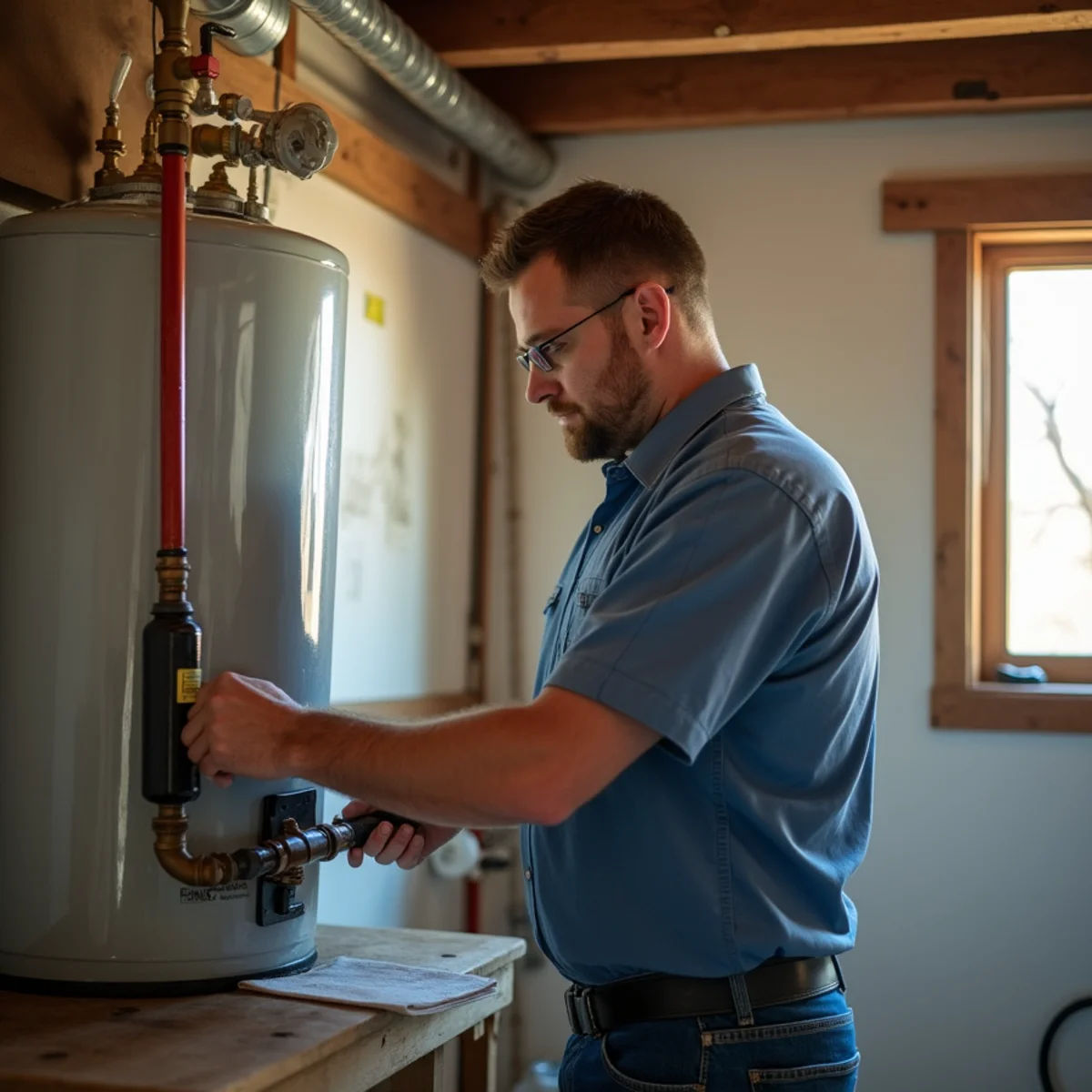
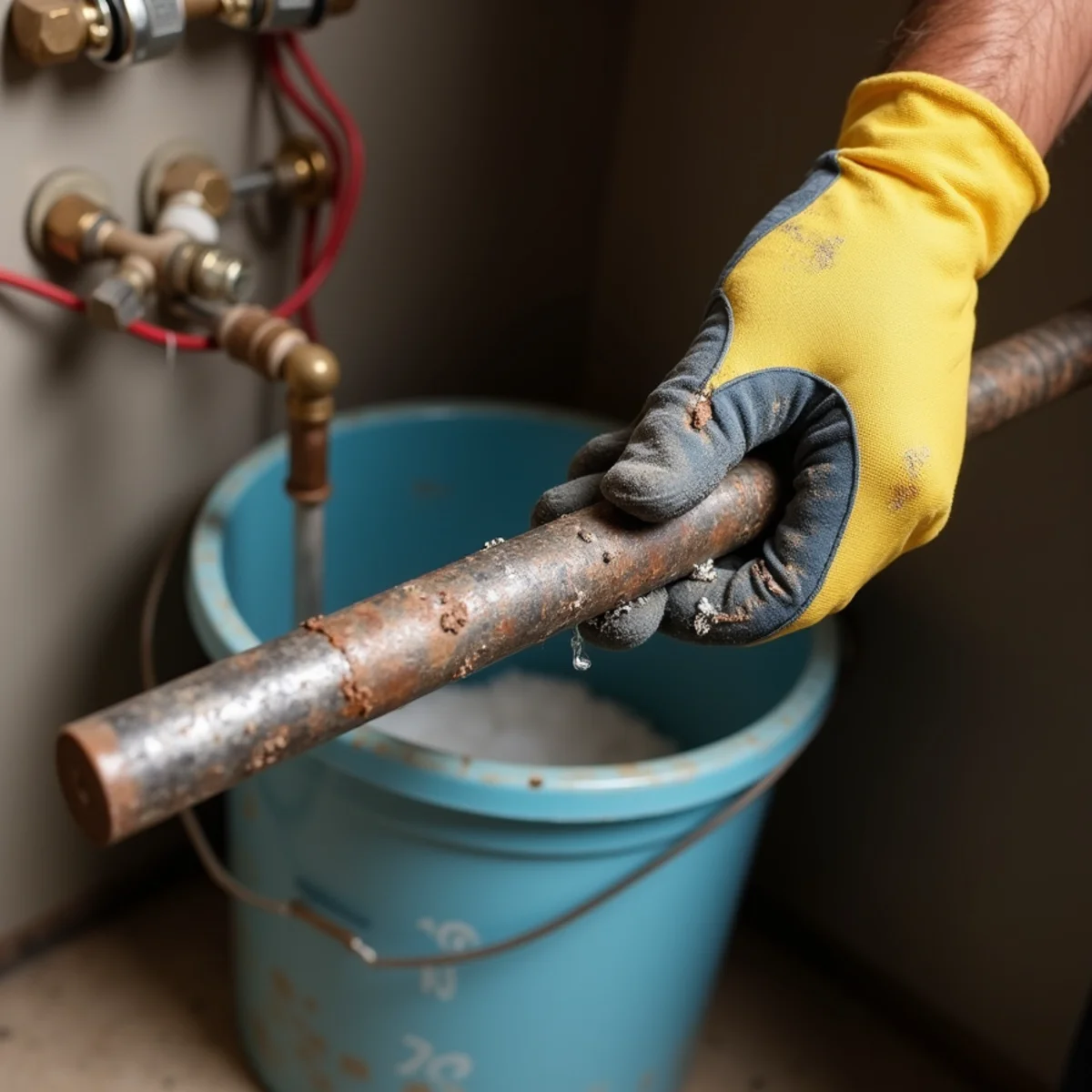
If the smell shows up only in the hot water, the water heater is part of the story. Every steel tank has an anode rod, usually magnesium, that corrodes so the tank does not. Some Trinity Aquifer wells carry sulfate, and sulfate-reducing bacteria in a warm tank react with a magnesium anode to make hydrogen sulfide. That is the rotten egg smell.
If the cold water smells too, the source is more likely the well, and the fix belongs on the well side, such as filtration or treatment. Our septic and well plumbing service covers filter and softener hookups.
For a smell that starts in the heater, the plumber may:
- Swap the magnesium anode for an aluminum-zinc or a powered anode
- Disinfect and flush the tank to clear the bacteria
Do not pull the anode and leave it out. The smell fades, and the tank starts to rust.
Need a plumber now? A real person answers, day or night.
Answering 24/7Every plumber we send is licensed and insured in Texas.
Tankless water heaters on well water: descaling and flow
A tankless heater saves space and does not run out mid-shower, but hard well water is tough on it. Scale forms inside the heat exchanger, whose narrow passages clog much sooner than an open tank. On untreated Trinity Aquifer water, plan on descaling at least once a year, with service valves installed so it can be done without cutting pipe. A softener or scale filter ahead of the unit makes a large difference.
Flow is the other issue. A tankless heater fires only above a minimum flow rate. On a well, pressure swings as the pressure tank draws down and the pump kicks on, and some units answer with bursts of cold water. Well sediment can clog the inlet screen, so a sediment filter belongs ahead of it. When a tankless unit does act up, the error code on its display is the starting point; the usual culprits are a dirty flame rod, a failed igniter, a scaled heat exchanger, a clogged inlet screen or a flow sensor that no longer reads the water moving.
Fuel and capacity matter more than with a tank. A propane tankless unit usually needs a larger gas line and its own vent. An electric one draws a lot of current, and many rural homes lack the electrical service for it without an upgrade. If your well pressure has been unreliable, sort that out first; our checklist for a house with no water on a well is a good place to start.
Sizing a replacement: tank capacity, first-hour rating and tankless flow
Bigger is not always better. For a tank, the useful number is the first-hour rating on the label: how much hot water it delivers in the first hour of heavy use. A household that runs back-to-back showers and the washer in the morning needs a higher rating than one that showers at night. A weekend cabin that sits empty most of the week may do best with a smaller tank, or with the heater switched off between visits.
For tankless, size by flow and temperature rise: how many gallons per minute you need at once, and how much the unit must heat the water. Well water in winter comes in colder than in summer, so a unit that keeps up in August can fall short in January.
There is one more option: a heat-pump (hybrid) electric water heater, which pulls heat from the surrounding air and uses far less electricity than a standard electric tank. It needs room around it and does best in a garage or utility room that does not get very cold, so it suits some Bandera County homes and not others. The plumber can walk you through the trade-offs before you choose.
Need a plumber now? A real person answers, day or night.
Answering 24/7Every plumber we send is licensed and insured in Texas.
How a replacement visit works, from the call to hot water
- The call. Tell the dispatcher the fuel type, the tank size if you know it, where the heater sits and whether it is leaking. If it is, close the cold supply valve above the heater and turn off its breaker or gas control.
- The price. The plumber looks at the setup and gives you a price before work starts.
- Removal. The old heater is drained, disconnected and hauled out.
- Installation. The new heater goes in with new connections, a relief valve line run to a safe discharge point, and a drain pan or expansion tank where the setup calls for one. Propane units get their gas connection leak-tested and their vent checked.
- Filling first. The tank is filled and air is purged from the lines before the power or gas goes on.
- Testing. Hot water at the taps, no leaks, and a look at where the shutoffs are.
The same work is available across our service area around Bandera, including acreage homes in Pipe Creek, Medina Lake homes in Lakehills and ranch houses and cabins near Medina.
What affects water heater cost
You get a price before work starts. What drives it:
- Repair or replacement. A thermostat or thermocouple is a different job from a new heater.
- Fuel type. Propane adds gas and venting work; electric adds a check of the wiring and breaker.
- Tank or tankless. Tankless installs often need a new vent, a larger gas line or electrical upgrades.
- Size. A larger tank or a higher-output unit costs more.
- Location and access. An attic, a tight closet or an outbuilding takes longer than an open garage.
- Code and safety items. A new relief valve line, drain pan or expansion tank when the existing setup lacks them.
- Timing. Nights, weekends and holidays may carry different rates.
Our guide to plumber pricing in Bandera County explains these factors in more depth. For leaks elsewhere in the house, see plumbing repair, and if a frozen line split and took the hot water with it, go to burst pipe repair.
Why call Bandera Plumbers for water heater repair
Repair or replace, decided on the facts
The plumber reads the age off the data plate, looks at where the water is coming from and tells you which way makes sense, with a price for each.
Propane and electric, the rural way
Most ranches and acreage homes here have no natural gas. The plumbers we send work on propane and electric tank heaters and tankless units, and on all the major brands.
Hard-water know-how
Sediment, scaled elements, rotten-egg anodes and tankless descaling are everyday Trinity Aquifer problems. You get advice that fits your water, not a city manual.
Answered 24/7, licensed and insured
A leaking tank does not wait for Monday. A person answers any hour, and every plumber we send is licensed and insured in Texas.
Water Heater Repair questions from Bandera County
How long does a water heater last on hard well water?
Usually less time than the same heater would last on softened water. Hard Trinity Aquifer water leaves scale and sediment in the tank, which overheats the bottom on propane units and burns out elements on electric ones. A tank that is flushed every year, has its anode rod checked and sits behind a softener has the best chance of reaching its design life. One that has never been flushed can fail years early, often with a leak from the bottom of the tank.
Why does my hot water smell like rotten eggs?
Most often, bacteria in the warm tank are reacting with the magnesium anode rod and making hydrogen sulfide. If only the hot water smells, the heater is the likely source, and swapping in an aluminum-zinc or powered anode, then disinfecting and flushing the tank, usually clears it. If the cold water smells as well, the sulfur is coming from the well and needs treatment on the well side. Never remove the anode without replacing it, because the tank will rust out much sooner.
Tank or tankless for a home on a well?
A tank heater is the simpler, more forgiving choice for most well homes. Tankless units work on well water, but they need scale protection on hard Trinity Aquifer water, a sediment filter, yearly descaling and steady pressure from the well system. A propane tankless unit often needs a larger gas line and new venting, and an electric one may need an electrical upgrade. If you want endless hot water and are ready for the upkeep, tankless can make sense. The plumber will look at your water, pressure and fuel before recommending one.
Can you replace a propane water heater?
Yes. The plumber we send can replace a propane water heater, tank or tankless, including the gas connection, the vent and the relief valve line, then leak-test the connection and light the new unit. The new heater must be rated for propane, not natural gas. If the problem is the propane tank, the regulator or the supply, that belongs to your propane supplier, and the plumber will tell you so. If you ever smell gas, leave the building and call 911 or your supplier from outside.
What size water heater do I need?
Go by the first-hour rating rather than the tank size alone. A couple who shower at different times may be fine with a 40-gallon tank; a family running showers, a dishwasher and laundry in the same morning usually needs a higher first-hour rating or a second look at tankless. For a tankless unit, size it by the gallons per minute you use at once and by how cold the well water comes in during winter. The plumber can size it on site before giving you a price.
Why is my water heater not getting hot?
On an electric heater, the usual causes are a tripped breaker, a tripped high-limit reset or a burned-out element, often the lower one buried in sediment. On a propane heater, it is usually the pilot, the thermocouple or flame sensor, the gas control valve or an empty propane tank. Hot water that runs out quickly instead of never getting hot points to sediment or a broken dip tube. Check the breaker or pilot first, then call.
Still have a question? Ask the person who answers the phone.
Answering 24/7Every plumber we send is licensed and insured in Texas.