Septic and well plumbing in Bandera, TX is the work between your wellhead and your faucets, and between your drains and the septic tank: pressure tanks, pressure switches, supply lines, the house-to-tank line, cleanouts and vents. Bandera Plumbers sends a licensed plumber for that work 24/7, and tells you straight when the problem belongs to a septic provider or a well pump installer instead.
City sewer or septic, city water or well: what your Bandera property is on
Septic and well plumbing in Bandera, TX starts with one question: where does your water come from, and where does it go? The City of Bandera supplies water and sewer only inside the city limits and part of its extraterritorial jurisdiction. Outside town, most homes in Bandera County are on a private well and a septic system. A few communities have a small water system instead, such as Medina Water Supply Corporation in Medina and Bandera County Fresh Water Supply District No. 1 in parts of Lakehills, but those homes still almost always have septic.
Quick ways to tell what you have:
- City water and sewer: you get a city bill and there is a meter box near the street.
- Private well: there is a well house, a pressure tank in a closet or garage, or a breaker labeled "well" or "pump".
- Septic: there are tank lids or risers in the yard, sprinkler-style spray heads in a fenced area, or an aerobic unit with an alarm light.
Housing shapes what goes wrong. Out along SH 16 toward Pipe Creek, many homes are newer acreage builds with a well, a pressure tank, a softener and often an aerobic septic system with a spray field over shallow limestone. Around Medina Lake in Lakehills, many houses began as weekend cabins on small, rocky lots, with older septic systems now serving full-time households. Up the river in Medina, ranches and cabins sit higher and colder, and well heads take the worst of a freeze. Our service areas page covers the rest of the county.
Warning signs on a septic or well system
Both systems give warning before they fail outright. Call when you see these, not after the yard is wet or the taps are dry.
Septic side:
- Gurgling in a sink or tub when the toilet flushes or the washer drains
- Several drains slow at once, or the lowest drain in the house backing up first
- Sewage smell inside, or a wet, green or soggy patch over the line or the field
- The aerobic unit's alarm light or buzzer, or spray heads that stopped spraying
Well side:
- The pump clicking on and off every few seconds while one tap runs
- Pressure that surges and fades, or air spitting from the faucets
- Cloudy, gritty or sandy water that was clear before
- The well breaker tripping when the pump starts, or a power bill that jumped for no reason
- The pump running when nobody is using water, which usually means a leak somewhere
Need a plumber now? A real person answers, day or night.
Answering 24/7Every plumber we send is licensed and insured in Texas.
Septic-side plumbing: backups, the line from the house to the tank, cleanouts and vents
Everything from your fixtures to the inlet of the septic tank is drain plumbing, and that is the part the plumber we send works on:
- Septic backup into tubs, showers and toilets caused by a blockage in the house drain or the line to the tank
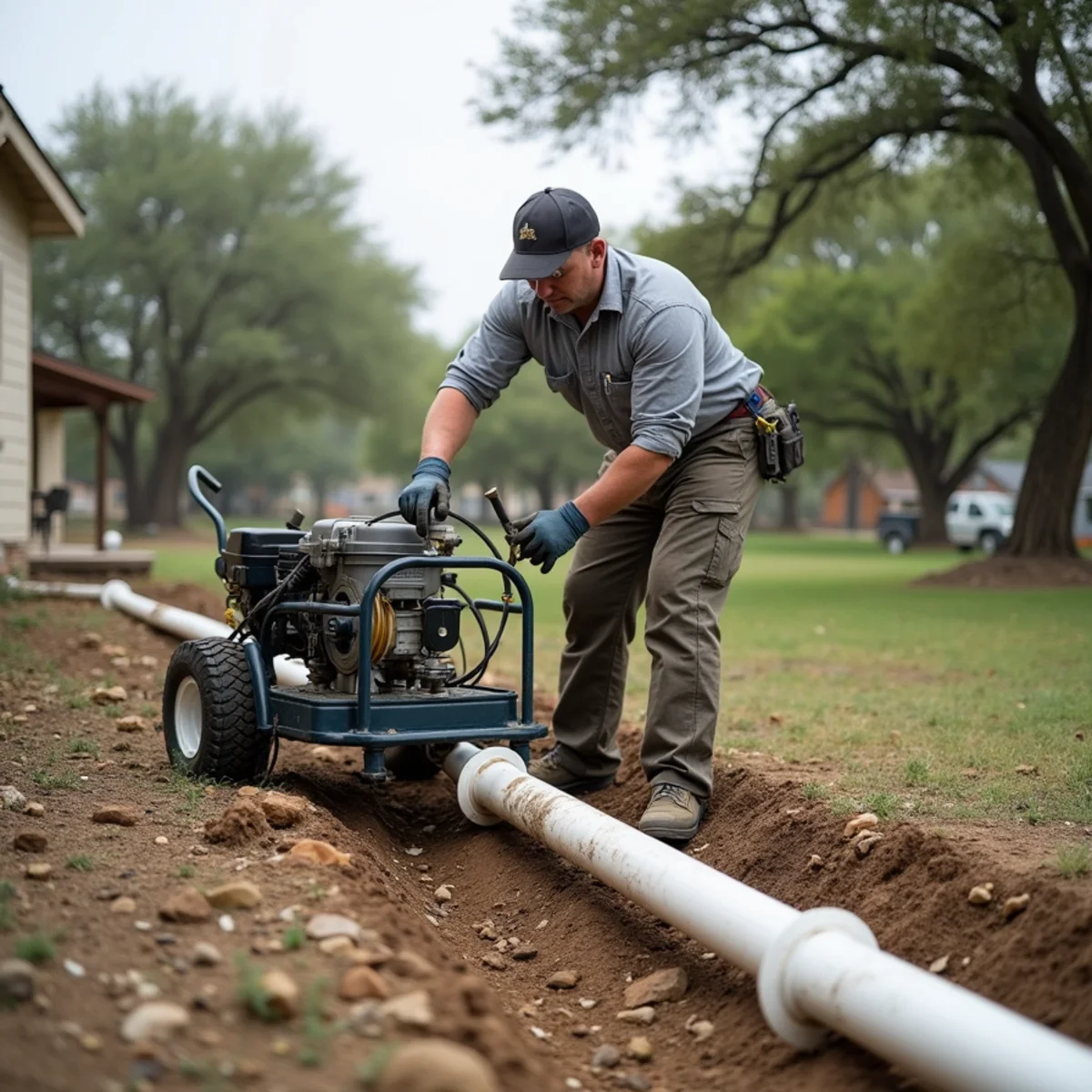
- The house to septic tank line: broken, sagging or root-filled pipe, and lines crushed by vehicles
- Cleanouts: finding buried ones, adding new ones, replacing cracked caps
- Vents: blocked roof vents that make drains gurgle and let sewer gas into the house
- Septic line repair from the foundation up to the tank inlet
Aerobic units: the alarm, the chlorinator and the maintenance contract
Shallow soil over limestone is why so many Bandera County homes have an aerobic treatment unit with spray heads instead of a conventional drain field. An aerobic unit has an aerator (air pump), a treatment tank, a pump tank, a chlorinator that takes tablets, and the spray heads. The alarm usually means high water in the pump tank or a failed aerator. Cut back on water use and call your maintenance provider; if the house drains are also backing up, call a plumber too, because a clog in the line can look like a tank problem from inside.
Texas rules require a maintenance contract on aerobic systems, with routine inspections by a licensed maintenance provider. Check your contract, or ask Bandera County, if you are not sure yours is current. As for pumping, the EPA's general guidance is that household tanks typically need it every three to five years; how often yours does depends on its size, the system type and how many people live there.
Many ranch houses have one long run to the tank with no cleanout. Adding a two-way cleanout just outside the foundation makes every future clog quicker and cheaper to clear. For clogs inside the house, our drain cleaning service explains which methods are safe to use on a septic system.
Is it a clog or a full tank? How we tell before anyone digs
Water coming up in the shower can mean a clog or a problem at the tank. Which one it is decides who you need.
| What you see | What it usually points to | First check |
|---|---|---|
| One fixture is slow, the rest are fine | Clog in that fixture's drain | Try a plunger; skip chemical cleaners |
| Several fixtures slow, the lowest drain backs up first | Clog in the main line or the line to the tank | Open the outside cleanout cap |
| Cleanout is dry but the house is backing up | Blockage between the house and the cleanout | Call a plumber for drain cleaning |
| Cleanout is full of standing water | Blockage at the tank inlet, or a full or failing tank | Call a plumber; a septic provider may be needed too |
| Aerobic alarm light or buzzer is on | Trouble in the treatment unit: aerator, pump or high water | Call your septic maintenance provider |
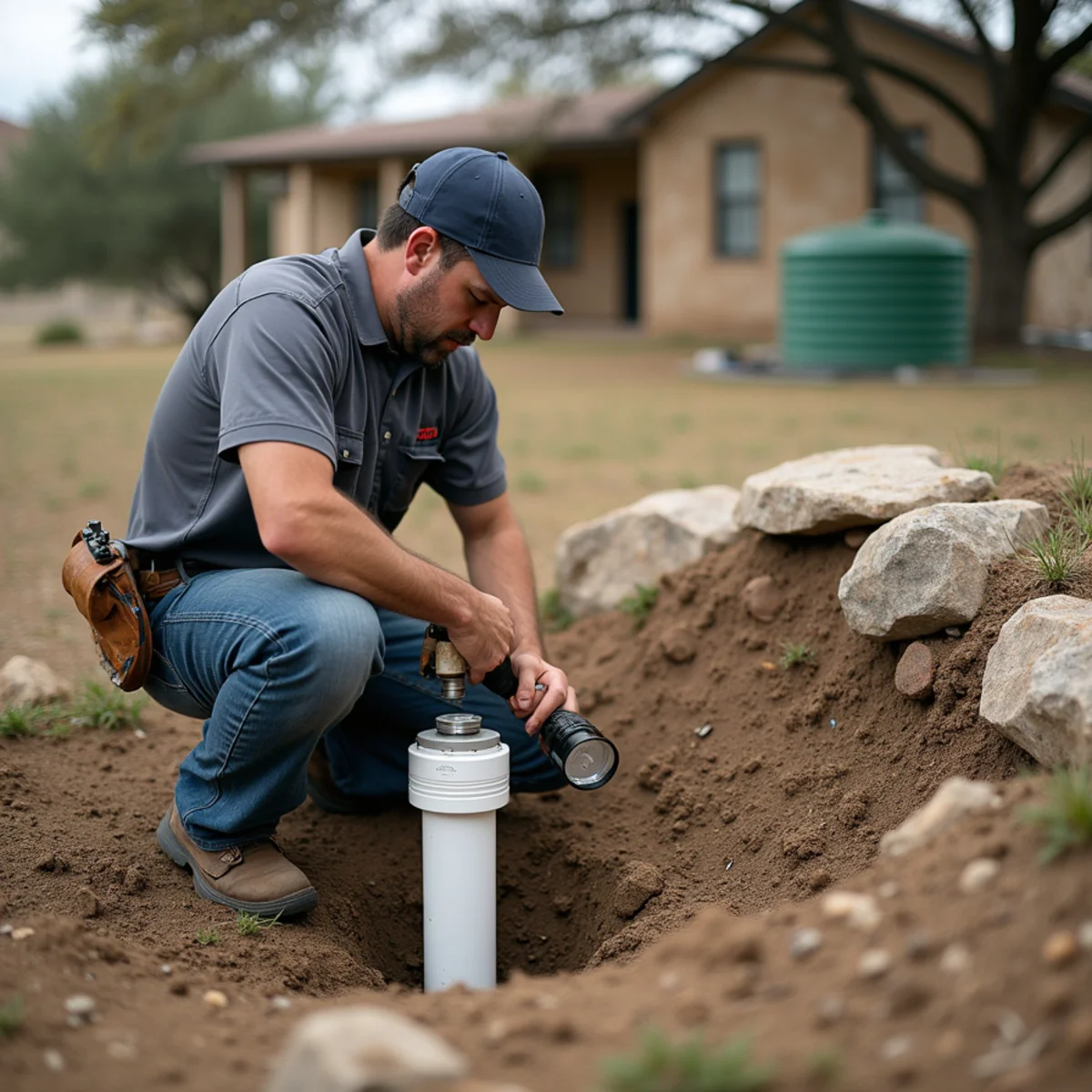
On site, the plumber opens the cleanout and runs a cable or camera toward the tank. If the line clears and the house drains, it was a clog. If the pipe is clear to the tank but water still stands at the inlet, the trouble is in the tank or the field, and you need a licensed septic provider. A camera also shows roots, sags and broken pipe before anyone picks up a shovel.
Need a plumber now? A real person answers, day or night.
Answering 24/7Every plumber we send is licensed and insured in Texas.
Well-side plumbing: pressure tanks, pressure switches and the line from the wellhead to the house
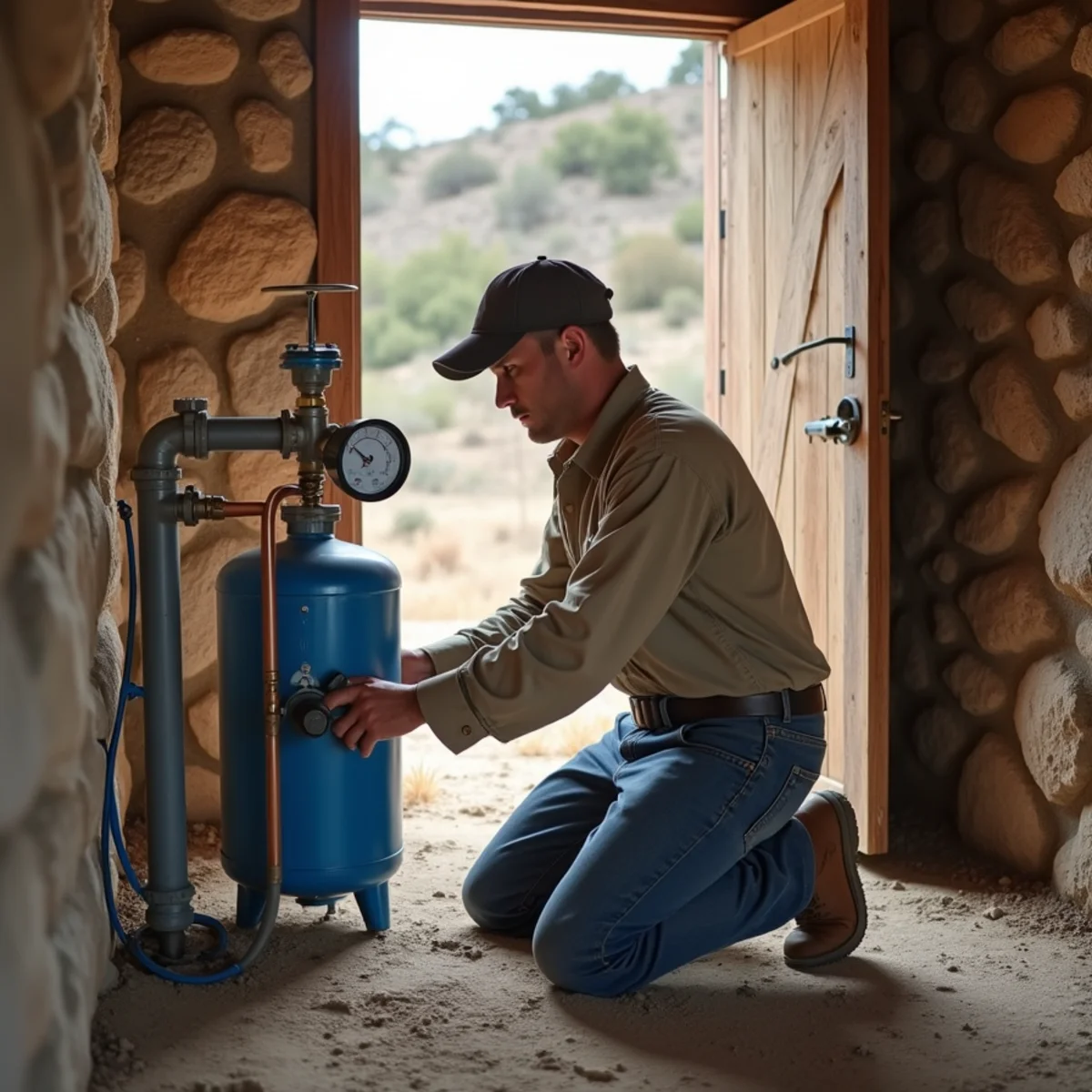
A private well has a submersible pump down the hole, a line to the pressure tank, a pressure switch that starts and stops the pump, and the supply line into the house. Bandera County wells draw mostly from the Trinity Aquifer. Everything from the wellhead to your faucets is plumbing work:
- Well pressure tank replacement when the bladder fails or the tank waterlogs and the pump short-cycles
- Pressure switch replacement and adjustment, along with the gauge and the tank tee it sits on
- Well water line repair on the buried line from the wellhead to the house, often shallow and under a driveway
- Check valves, relief valves, filters and well-house piping
A waterlogged tank is the most common well-side problem: the pump clicks on and off every few seconds while a tap runs and wears out early from all those starts. Replacing the tank, or restoring its air charge when the tank is sound, protects the pump.
Pressure switch settings and the tank's air charge
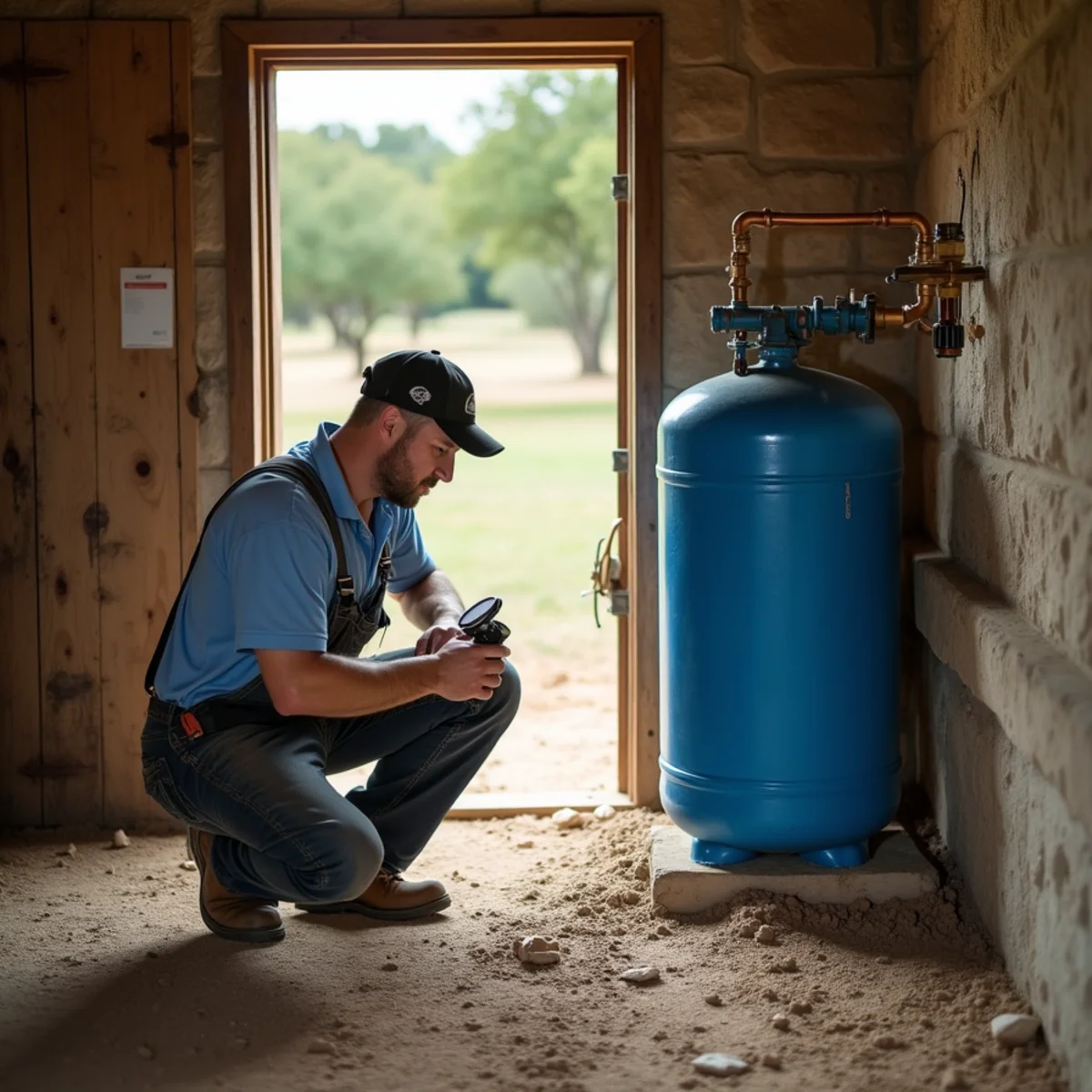
The pressure switch turns the pump on at the cut-in pressure and off at the cut-out pressure. Common household settings are 30/50 and 40/60 psi. The bladder tank's air charge should sit about 2 psi below cut-in, checked with the pump off and the tank drained. If the charge is low, or the bladder has failed and the tank is full of water, the tank stops cushioning the system and the pump short-cycles. The plumber checks the switch contacts, the tiny tube under the switch (hard water scales it shut), the charge and the drawdown before replacing anything.
Some newer homes have a constant-pressure system with a variable-speed controller instead of a plain switch. Those smooth out the pressure, but they still rely on a small tank and a clean sensing line, and the plumber can check both.
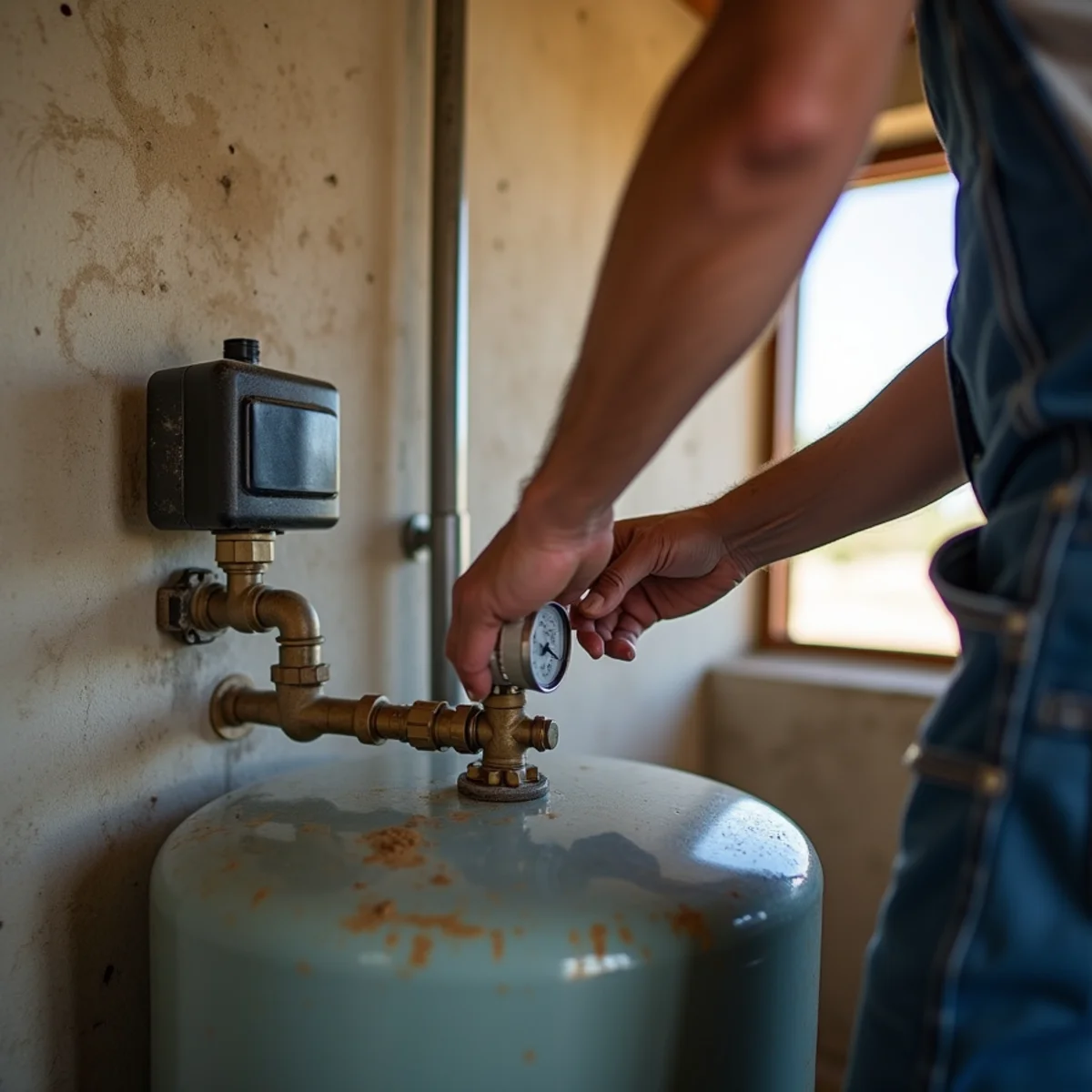
No water or sputtering faucets: what to check at the breaker and the pressure gauge first
A few safe checks narrow down a no-water call before anyone talks about pulling a pump.
- Check the breaker. Most well pumps run on their own 240-volt breaker. If it tripped, reset it once. If it trips again, leave it off and call.
- Read the pressure gauge at the tank. Near zero with the breaker on means the pump is not delivering water. Normal pressure with no water at the taps points to a closed valve, a clogged filter or a frozen line.
- Check the filter. A packed sediment cartridge can choke the house to a trickle. Try the bypass valve if you have one.
- Listen at the pressure switch. Leave the cover on and listen for a click as the pressure drops. No click usually means no pump. Do not open the cover or tap the contacts; the switch carries 240 volts.
- Think about the weather. After a hard freeze, suspect a frozen line first.
Sputtering faucets can mean a falling water level, a leak in the drop pipe or a failing check valve. Our no water from the well checklist goes step by step. If a line in the well house froze and split, burst pipe repair explains how to shut everything down safely.
Need a plumber now? A real person answers, day or night.
Answering 24/7Every plumber we send is licensed and insured in Texas.
Trinity Aquifer water: hardness, sediment, sulfur smell and softener or filter hookups
Trinity Aquifer water is hard, and in places high in sulfate. Hard water scales water heaters, faucets and even the small tube under a pressure switch. Some wells also carry hydrogen sulfide, the gas behind a rotten egg smell.
Plumbers handle the hookups that treat this water:
- Water softener hookup, including the bypass valve, inlet and outlet lines, drain line and brine tank overflow
- Whole-house sediment and carbon filters with service shutoffs
- Repiping a cramped well house so equipment can be serviced
Depending on what the water carries, the fix might also be an iron filter, a UV light for bacteria, or a reverse osmosis unit under the kitchen sink for drinking water. Test the water before buying equipment. Texas A&M AgriLife Extension recommends testing a private well at least once a year, and after any flood or repair to the well.
If only the hot water smells, the usual source is the water heater's anode rod, which our water heater repair page covers. If the cold water smells too, the source is the well. On a septic system, ask your septic provider where softener regeneration water should drain before the plumber runs that line.
What a plumber handles and what needs a licensed septic or well pump specialist
Texas splits this work across three licenses, and we will tell you if you need someone besides the plumber.
- A licensed plumber handles drains, the house-to-tank line, cleanouts and vents on the septic side, and the pressure tank, pressure switch, wellhead-to-house line and softener or filter hookups on the well side.
- A TCEQ-licensed septic provider handles tank pumping, aerobic unit service and alarms, and spray field or drain field repair.
- A TDLR-licensed pump installer pulls and replaces the submersible pump.
On-site sewage systems are permitted by Bandera County, as TCEQ's authorized agent. Check with Bandera County before any repair to the septic system itself, meaning the tank, the treatment unit or the field. If the problem is on that side, the plumber will say so and stop there. Every plumber we send is licensed and insured in Texas.
Need a plumber now? A real person answers, day or night.
Answering 24/7Every plumber we send is licensed and insured in Texas.
How a septic or well plumbing call works
- Call (858) 363-8298. Tell the dispatcher whether it is the septic side (backup, smell, alarm) or the well side (no water, low pressure, short-cycling), and whether you have checked the breaker and the cleanout.
- We route it. If it sounds like a full tank or a dead pump down the well, you hear that on the phone and who to call for it. If it is plumbing, a licensed plumber is dispatched with your gate code and directions.
- Diagnosis on site. The plumber opens the cleanout or reads the pressure gauge, checks the switch, the tank charge and the lines, and finds which side of the line the problem is on.
- Price before work. You get the options and the price. If a septic provider or pump installer is also needed, the plumber tells you before doing anything that would have to be redone.
- The repair. Line, cleanout, tank, switch or valve, done to code.
- The test. The plumber runs water through the drains or cycles the pump and watches the gauge, and leaves you with an invoice that lists the work.
What affects the cost of septic and well plumbing work
Much of a septic or well system is buried or tucked into a well house, so jobs vary. You get a price before work starts. These factors move it:
- Finding things. Buried cleanouts, tank lids and lines take time to locate.
- Crawlspace or slab. A house drain under a pier-and-beam floor can be reached from below. Under a slab, the plumber may have to cut concrete or reroute.
- Access. Cramped well houses and tanks under decks slow the work.
- Digging. Soil is quicker to dig than limestone.
- Distance. Ranch roads and locked gates add travel time.
- After-hours calls. Nights, weekends and holidays usually cost more than a weekday visit.
- Materials and parts. Tank size and line length matter, and an odd-sized tank may need a supply-house trip.
- A second specialist. If the tank needs pumping or the pump needs pulling, that visit is separate from the plumber's.
For everyday fixes inside the house, see our plumbing repair service. For a backup or a dry tap right now, call (858) 363-8298.
Why call Bandera Plumbers for septic and well plumbing
We sort out who you need before anyone drives
Plumber, TCEQ-licensed septic provider or TDLR-licensed pump installer: the person on the phone helps you work out which, so you do not pay for a trip that cannot fix the problem.
Well and septic are normal work here
Most of Bandera County lives on a private well and a septic system. Pressure tanks, short-cycling pumps and backups at the tank inlet are routine calls, not specialties we dabble in.
Licensed and insured in Texas
Every plumber we send is licensed and insured in Texas. Ask for the license number and check it with the State Board of Plumbing Examiners before work starts.
Answered 24/7, priced before work
A dry tap at 5 a.m. or sewage in the tub on a holiday gets a person on the phone and a plumber on the road. You approve the price before any repair starts.
Septic and Well Plumbing questions from Bandera County
Everything in my house is draining slowly. Is it the septic tank or a clog?
When every drain is slow, the problem is past the point where your fixtures join, so it is the main line, the line to the tank or the septic system itself. Open the outside cleanout. If it is dry, the blockage is between the house and that cleanout, and a plumber can clear it. If it is full of standing water, the blockage is at the tank or beyond, and the tank may need pumping. Stop running water until someone checks it.
I have no water and I am on a well. Do I need a plumber or a well company?
Start with a plumber unless you already know the pump has failed. Most no-water calls come from parts above ground: a tripped breaker, a failed pressure switch, a waterlogged tank, a clogged filter or a frozen line, and a plumber fixes all of those. If the plumber finds the pump down the well is not running when it should be, you need a TDLR-licensed pump installer to pull it, and we will tell you so.
Can a plumber repair the pipe between my house and the septic tank?
Yes. The line from the house to the septic tank is drain plumbing, and repairing it is plumbing work: clearing clogs, replacing broken or root-filled sections, fixing sags and adding cleanouts. The plumber works up to the tank inlet. Anything inside the tank, the aerobic unit or the field belongs to a TCEQ-licensed septic provider. Because work near the tank can touch the permitted system, check with Bandera County before any repair to the septic system itself.
Do repairs to a septic system need a Bandera County permit?
Check with Bandera County before any repair to the septic system itself, meaning the tank, treatment unit or field. Bandera County permits on-site sewage systems as TCEQ's authorized agent, and the county can tell you what applies to your property and who may do the work. Clearing a clog or repairing the drain line from the house is plumbing work, but if you are unsure where your repair falls, ask the county first.
What do I do when my aerobic septic alarm goes off?
Cut back on water right away: no laundry, no dishwasher, short showers. Check that the breaker for the aerobic unit has not tripped. The alarm usually means high water in the pump tank or a failed aerator, which is work for your septic maintenance provider. If drains in the house are also backing up, call a plumber as well, because a clog in the line from the house can look like a tank problem from inside.
How often should a septic tank be pumped?
The EPA's general guidance is every three to five years for a typical household tank, but the right interval depends on the tank size, how many people live in the house, and whether it is a conventional or aerobic system. Aerobic units are inspected on a schedule under their maintenance contract, and the provider will tell you when pumping is due. A house full of weekend guests fills a tank faster than the same house with two people in it.
What should my well pressure switch be set to?
Most homes run a 30/50 or 40/60 psi switch: the pump starts at the first number and stops at the second. The pressure tank's air charge should be about 2 psi below the cut-in, checked with the pump off and the tank empty. If your pump short-cycles or the pressure swings, the charge or the tank is usually the problem rather than the switch setting. Leave the switch cover on; it carries line voltage.
Still have a question? Ask the person who answers the phone.
Answering 24/7Every plumber we send is licensed and insured in Texas.